

By Diana N. Kintu
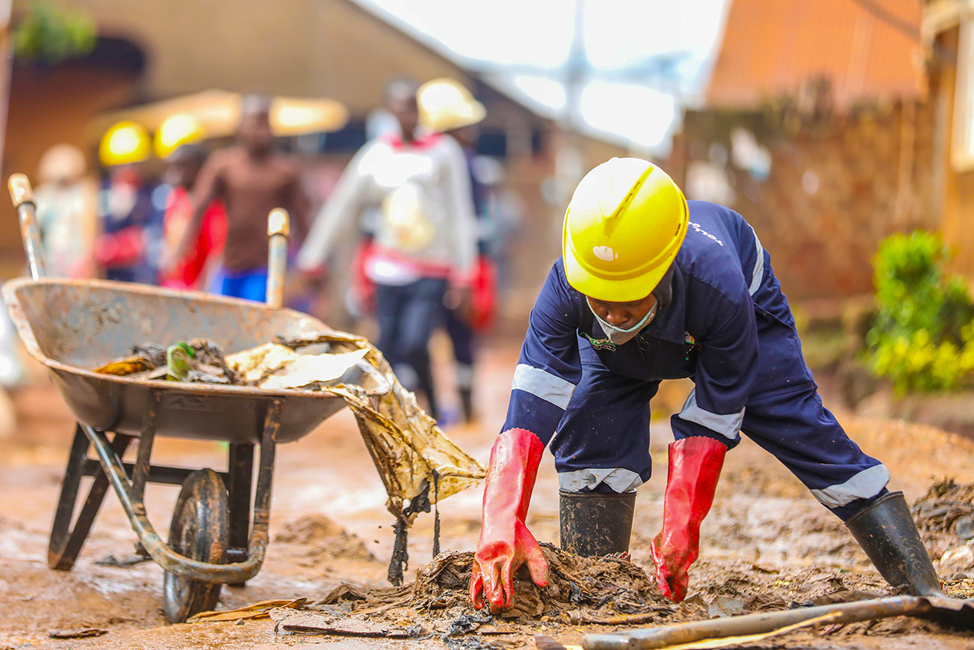
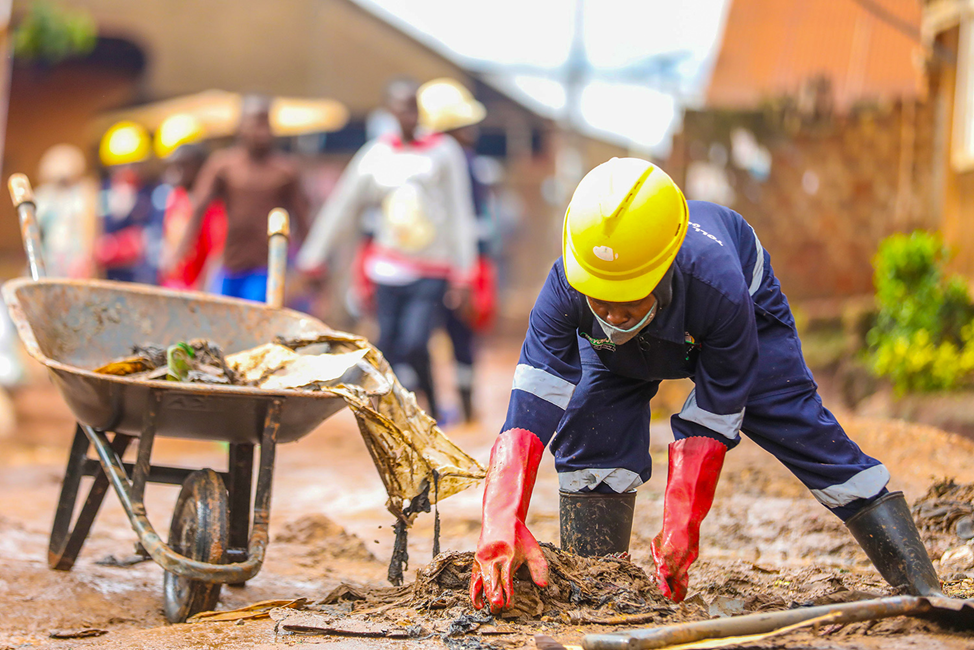
Figure 1 the lady cleaning in the photo Copyright: © 2021 Windle International Uganda, Creator: JOHN PAUL AGABA
The smell comes first. Long before anyone sees the flooded drainage channels winding through Kampala’s Kisenyi suburb, they smell them. After a night of heavy rain, black water lies trapped beneath discarded plastic bottles, polythene bags and rotting food waste. Children in neatly pressed school uniforms hop from stone to stone, trying to keep their shoes dry as they make their way to school. Their laughter masks a danger they cannot see: water contaminated by garbage and disease.
For many residents, scenes like these have become an ordinary part of daily life. Yet they are also the reason the Government has introduced National Cleaning Days, a nationwide monthly initiative encouraging Ugandans to spend three hours every last Saturday cleaning their surroundings in a bid to improve public health and restore environmental sanitation.
Where the Rain Speaks First
By 8:30 on a grey morning in Kisenyi, the shelves inside a small neighbourhood pharmacy are neatly arranged, but the day has already begun. Parents arrive one after another, some carrying feverish children, others comforting little ones weakened by diarrhoea and stomach infections. For Lilian Babirye, a pharmacy attendant who has served the community for several years, these mornings have become painfully familiar. She no longer waits for health reports to tell her when sanitation has become a problem. The rain tells her first.
“After every heavy rain, we begin seeing more cases of diarrhea, stomach infections and malaria. It has become a pattern. Many of these illnesses could have been prevented if our surroundings were cleaner,” Babirye says as she arranges medicine on the shelves of her modest pharmacy.
She pauses and glances towards the drainage outside before quietly adding:
“People usually come looking for medicine, but sometimes the best medicine isn’t found in these bottles. It begins with a clean environment.”
For Babirye, poor sanitation is more than an environmental concern it is something she witnesses almost every day.
“When children fall sick because of poor hygiene or contaminated surroundings, families suffer twice,” she explains. “They lose money on treatment, children miss school, and parents lose time they would have spent working.”
When dirty drains empty shops
Just a few streets away, plastics trader Kenneth Kizito faces the same problem from a different angle. After heavy rain, he watches customers stop at the edge of the floodwater, look towards his shop and quietly turn away. Before he can think about selling, he must first clear rubbish from the drainage outside his business.
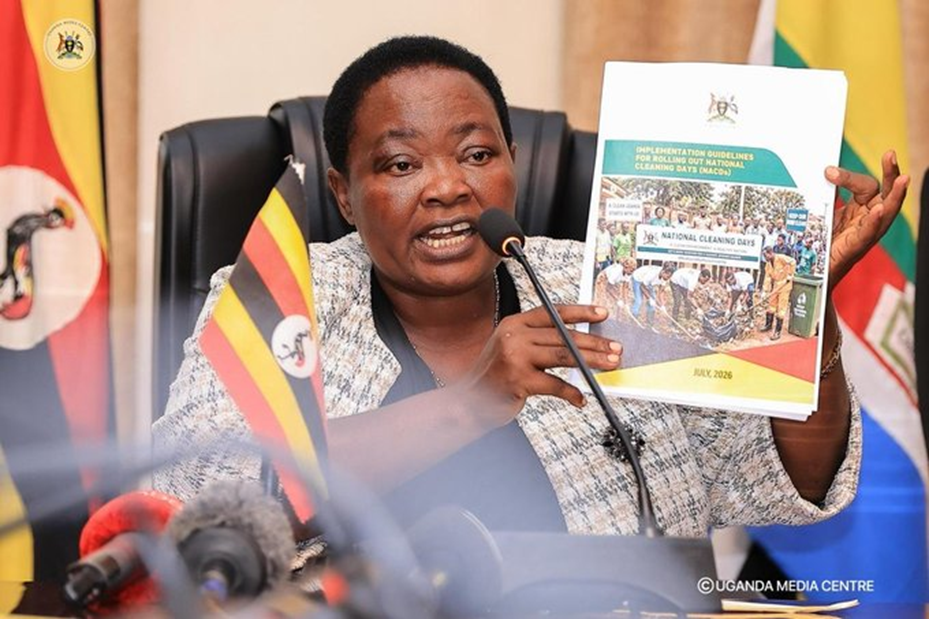
The prime minister announcing the new cleaning days
“When the drainage blocks, the water comes into our shops. Our goods get damaged, customers disappear, and business suffers,” Kizito says. “It doesn’t matter who threw the rubbish there. Everyone pays the price.”
Looking at the blocked channel outside his shop, he shakes his head.
“Many people think throwing away one plastic bottle doesn’t matter. But thousands of bottles later, the drainage can no longer breathe. When it rains, all that rubbish comes back to us.”
For Kizito, poor sanitation is no longer just an environmental issue. It is a threat to livelihoods.
A Crisis Too Big to Ignore
The experiences of Babirye and Kizito reflect a much wider national challenge. According to the Office of the Prime Minister, nearly 75 percent of Uganda’s disease burden is preventable, much of it linked to poor sanitation, unsafe water and poor hygiene. Kampala alone generates between 2,000 and 2,500 tonnes of solid waste every day, yet only about half is collected and safely disposed of. The remainder finds its way into drainage channels and neighbourhoods, waiting for the next downpour to carry it back into the communities where people live and work.
Behind every statistic is a child. Behind every flooded drainage channel is a family worried about illness. Behind every blocked drain is a trader wondering whether customers will return. It is these realities that gave rise to National Cleaning Days.
Beginning 25 July 2026, Ugandans will dedicate three hours from 7:00 a.m. to 10:00 a.m. on the last Saturday of every month to cleaning drainage channels, markets, schools, health centres and other public spaces. Launching the initiative, Prime Minister Rt. Hon. Robinah Nabbanja reminded the country that
“A clean Uganda cannot be achieved by Government alone. It requires the commitment of every citizen.” The campaign carries a simple but powerful message: “A Clean Uganda Is Everybody’s Responsibility.”
More Than Three Hours
For Babirye, success will not be measured by the number of brooms carried on one Saturday morning. It will be measured by fewer children arriving at her pharmacy with illnesses that could have been prevented. For Kizito, it will mean welcoming customers instead of sweeping floodwater away from his doorstep. The next time rain falls over Kisenyi, the drainage channels will face the same test. Whether they overflow again may depend less on the rain than on the choices people make before it arrives the bottle left beside the road, the rubbish thrown into a trench, the drain no one thought to clear.
National Cleaning Days may last only three hours each month. But protecting Uganda’s health is a responsibility that begins every single day. Sometimes the fight against disease does not begin in a hospital. Sometimes, it begins at the mouth of a drainage channel.