

By Diana N. Kintu
The Government of Uganda has announced a major policy shift in the fight against Foot and Mouth Disease (FMD), introducing compulsory biannual vaccination of all susceptible livestock under a new Cost Recovery Scheme.
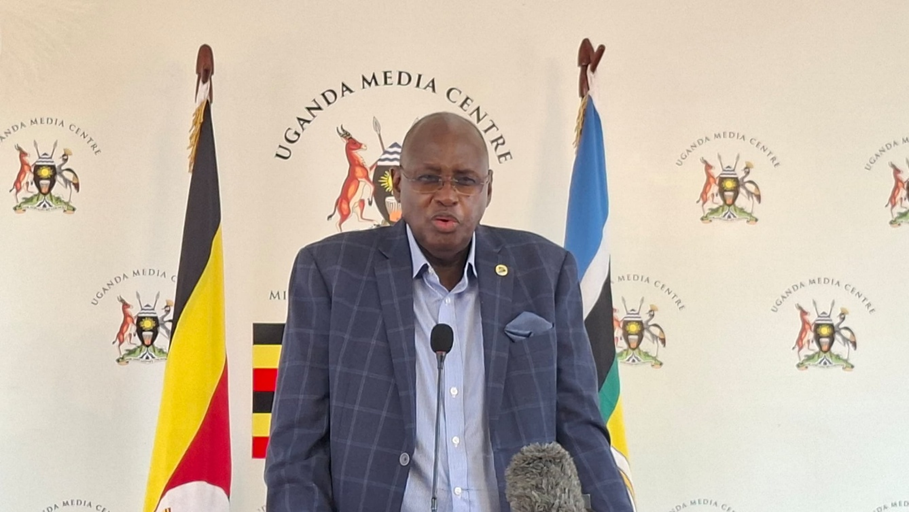
Speaking at a media briefing in Kampala, the Minister of State for Agriculture, Animal Industry and Fisheries (Animal Industry), Hon. Bright Rwamirama Kanyontore, said the new approach is designed to ensure sustainable control of FMD, which remains one of the most economically devastating livestock diseases worldwide.
“This vaccination programme is intended to progressively reduce FMD outbreaks, safeguard livestock investments, improve productivity, and support Uganda’s ambition to expand domestic, regional, and international trade in animals and animal products,” he stated.
FMD affects cloven-hoofed animals such as cattle, goats, sheep, and pigs, causing wounds, excessive salivation, lameness, reduced milk production, infertility, and, in severe cases, death among young animals.
While adult mortality is low, the economic consequences are enormous, often leading to quarantines, market closures, and loss of trade opportunities. Uganda’s livestock sector, with an estimated 44.5 million susceptible animals, contributes significantly to the economy, earning over USD 285 million from dairy exports, USD 12.9 million from hides and skins, and USD 6.5 million from gelatin and derivatives.
Between late 2023 and mid-2024, Uganda experienced one of its most widespread FMD outbreaks in recent years, particularly in the cattle corridor. The outbreak forced the government to impose quarantines and restrict animal movements, severely disrupting household incomes and trade. Rwamirama explained that while the government previously provided vaccines free of charge, insufficient resources prevented it from achieving the recommended 80–100 percent coverage.
“Recurring outbreaks have disrupted productivity, constrained trade, and limited Uganda’s ability to fully exploit regional and international markets,” he said.
Under the new scheme, farmers will contribute UGX 8,000 per dose for cattle and pigs, and UGX 4,000 per dose for goats and sheep. The Government will cover the costs of vaccine administration, cold chain management, distribution, supervision, and disease surveillance. Funds collected will be managed through a revolving account at the Bank of Uganda to guarantee continuous vaccine availability.
To support the programme, the government has secured 53.6 million doses of high-potency quadrivalent vaccines targeting the major FMD strains in the region. Investments have also been made in vaccine storage and distribution, including expanded capacity at Entebbe, 53 solar-powered district storage facilities, and improved refrigerated transport systems.
As of June 12, 2026, over 20,000 farmers had been onboarded into the national vaccination system, with 3.5 million animals registered. District veterinary teams are finalising micro-plans for the first nationwide vaccination campaign scheduled for July–August 2026, targeting all 44.5 million susceptible animals. Only vaccinated animals will be issued movement permits and market access certificates.
The minister noted that the vaccination programme is part of Uganda’s wider efforts to strengthen animal health systems and meet international standards required for livestock exports. He said effective control of Foot and Mouth Disease will help improve the competitiveness of Uganda’s livestock products in regional and global markets.
According to the ministry, sustained vaccination is expected to reduce the frequent quarantines that have affected livestock-dependent communities in recent years, protecting farmers’ incomes while improving productivity and trade opportunities across the sector.
Rwamirama called for collective action, urging farmers, traders, processors, and veterinary personnel to support the programme.
“Every vaccinated animal is an investment in a healthier herd, higher productivity, and greater market opportunities. Together, we can eliminate the recurring burden of Foot and Mouth Disease and unlock the full potential of Uganda’s livestock sector,” he said.
The new policy marks one of the most ambitious animal disease control interventions in Uganda’s history, reflecting the government’s determination to protect livestock livelihoods and secure the future growth of the agricultural sector.
Source: Ministry of Agriculture, Animal Industry and Fisheries, June 2026.