

By Caroline N
Every day, up to 2,000 tonnes of waste are delivered to the Buyala Waste Management Facility from Kampala and surrounding municipalities. Now, the Government plans to transform the rapidly expanding site into a digitally managed waste hub powered by data, sensors and modern technology.
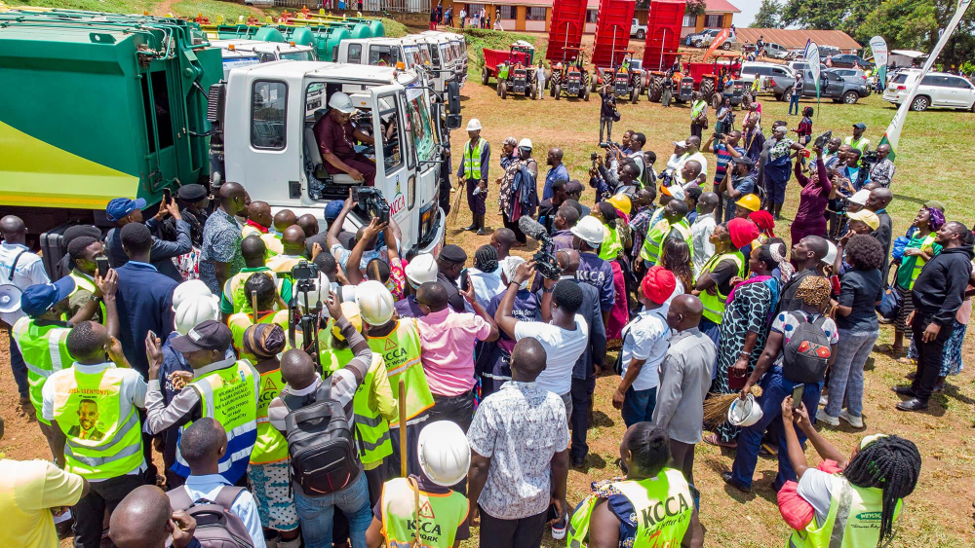
The proposed transformation was highlighted during a recent visit to the facility by officials from the Ministry of ICT and National Guidance and other government agencies. The officials assessed opportunities to utilise digital technologies to improve operations at what is rapidly becoming Uganda’s most important waste management hub.
Located in Mpigi District and managed by the Kampala Capital City Authority (KCCA), the Buyala Waste Management Facility currently processes between 1,500 and 2,000 tonnes of waste daily from the Greater Kampala Metropolitan Area (GKMA). The facility receives more than 150 trucks each day from Kampala and neighbouring urban centres, including Kira, Nansana and Mukono.
The growing volume of waste generated by expanding urban populations has increased pressure on existing waste disposal infrastructure, creating a need for more sustainable and efficient waste management solutions.
Although the facility occupies 230 acres, waste management activities are currently being conducted on only five acres approved by the National Environment Management Authority (NEMA) for emergency operations. Government officials say plans are underway to transform the site into a modern and technologically advanced waste management centre.
KCCA Executive Director Sharifah Buzeki said the Authority has already developed a comprehensive master plan to modernise the facility and move away from traditional waste disposal methods.
“We have a master plan and we are on the right track towards establishing a modern waste management facility. We cannot continue operating in the traditional way. Our goal is to create a modern facility that includes waste composting centres, waste-to-energy plants and material recovery hubs,” Buzeki said.
The planned transformation will include dedicated composting centres, waste-to-energy facilities and material recovery hubs designed to maximise resource utilisation while reducing environmental impact.
As part of the digitalisation agenda, officials are proposing the automation of the facility’s weighbridge to accurately capture data on the source, type and volume of waste entering the site. Sensors may also be installed to monitor gas emissions, toxicity levels and environmental pollution indicators in real time.
The adoption of these technologies is expected to strengthen data collection and analysis, enabling authorities to make informed decisions on waste management planning and investment.
Dr Aminah Zawedde, Permanent Secretary at the Ministry of ICT and National Guidance, said digital technologies have the potential to significantly improve operational efficiency and support evidence-based decision-making.
“We have seen the potential of digitisation in improving efficiency and supporting data-driven decision-making. This will help us determine the volume of waste being handled at the facility and understand how many people are benefiting from its operations,” Dr Zawedde said.
She noted that accurate data on waste volumes, employment and operational requirements would enable government to determine how many similar facilities are needed across the country.
“If we know exactly how much waste is coming in, how many people are employed, and what additional support is required based on the data collected, it will greatly assist us in determining how many more facilities like this Uganda needs,” she added.
Beyond waste disposal, Buyala has emerged as an important economic hub supporting livelihoods within the circular economy. The facility currently hosts 417 waste sorters and 57 traders who recover recyclable materials for industrial reuse. These workers earn between UGX 40,000 and UGX 50,000 per day through recycling-related activities.
Officials believe that integrating digital systems into waste management operations will not only improve efficiency and accountability but also promote environmental protection, job creation and sustainable urban development.
As Uganda continues its journey towards middle-income status, the Government views data-driven waste management as a critical component of building smarter, cleaner and more resilient cities. If successfully implemented, Buyala could become Uganda’s first fully data-driven waste management facility, demonstrating how technology can transform an urban challenge into an opportunity for environmental protection, resource recovery and economic growth.