

By Gilbert Kibekityo, Research and Policy Analyst, Uganda Manufacturers Association
In the 1950s, plastic emerged as one of humanity’s most transformative inventions. Light, durable, affordable and versatile, it quickly replaced traditional packaging materials such as glass, metal and paper in many applications. Today, plastic accounts for approximately 37 percent of all packaging materials used globally, making it the backbone of modern supply chains, food preservation systems and consumer markets.
Uganda embraced plastic packaging in the 1990s as manufacturing expanded and consumer demand accelerated. Three decades later, plastic packaging has become indispensable across the economy. Every day, food processors, beverage manufacturers, pharmaceutical companies, agricultural producers and fast-moving consumer goods manufacturers rely on plastic to safely deliver products to millions of consumers.
Yet the success of plastic has also created a challenge. As consumption increased, so did plastic waste. Across the world, discarded bottles, containers and packaging have become symbols of environmental degradation. But beneath this challenge lies one of Uganda’s most exciting economic opportunities.
What many people still see as waste is increasingly being viewed by investors, manufacturers and entrepreneurs as a valuable industrial raw material. A quiet recycling revolution is unfolding across Uganda.
Today, more than USD 120 million has already been invested in plastic recycling infrastructure across the country. Over 60 companies are actively engaged in the collection, processing and recycling of plastics, creating an ecosystem that supports more than 350,000 livelihoods. From waste collectors and aggregators to transporters, recyclers and manufacturers, an entire green economy has emerged around what was once discarded material.
The sector is not standing still. Uganda’s recycling industry is growing by approximately 7 percent annually, making it one of the fastest-growing segments of the country’s green economy. The scale of the opportunity becomes even more evident when viewed against Uganda’s consumption patterns.
According to trade data, Uganda imported nearly 497,000 tonnes of plastic materials in 2024. At the same time, the country’s recycling industry processed more than 105,000 tonnes of plastic waste, translating into a recycling rate of approximately 21.2 percent.
While this indicates significant progress, it also reveals enormous untapped potential. Nearly four out of every five tonnes of plastic entering the economy remain outside formal recycling systems, representing a massive opportunity for further investment, innovation and environmental recovery.
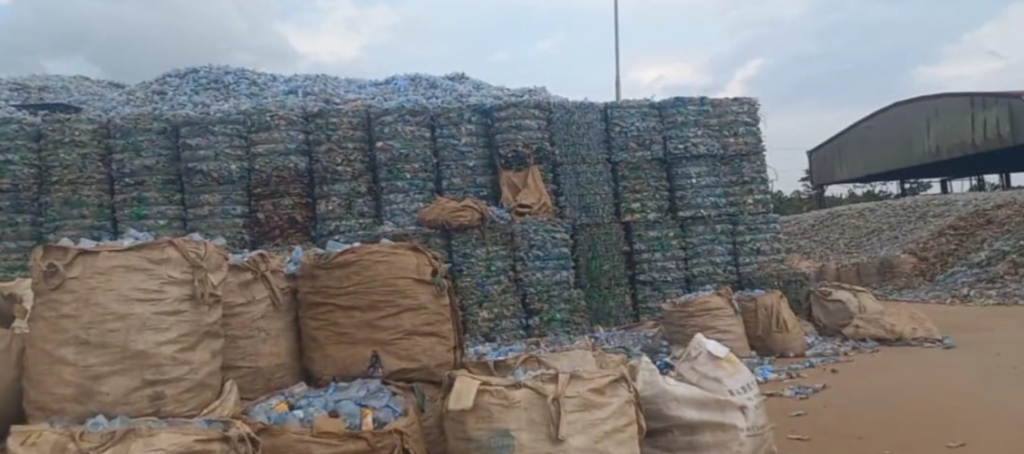
Every day, recyclers across Uganda collect more than 40 tonnes of plastic waste that would otherwise end up in drainage channels, wetlands, landfills and public spaces. What happens next demonstrates the remarkable transformation taking place within the sector.
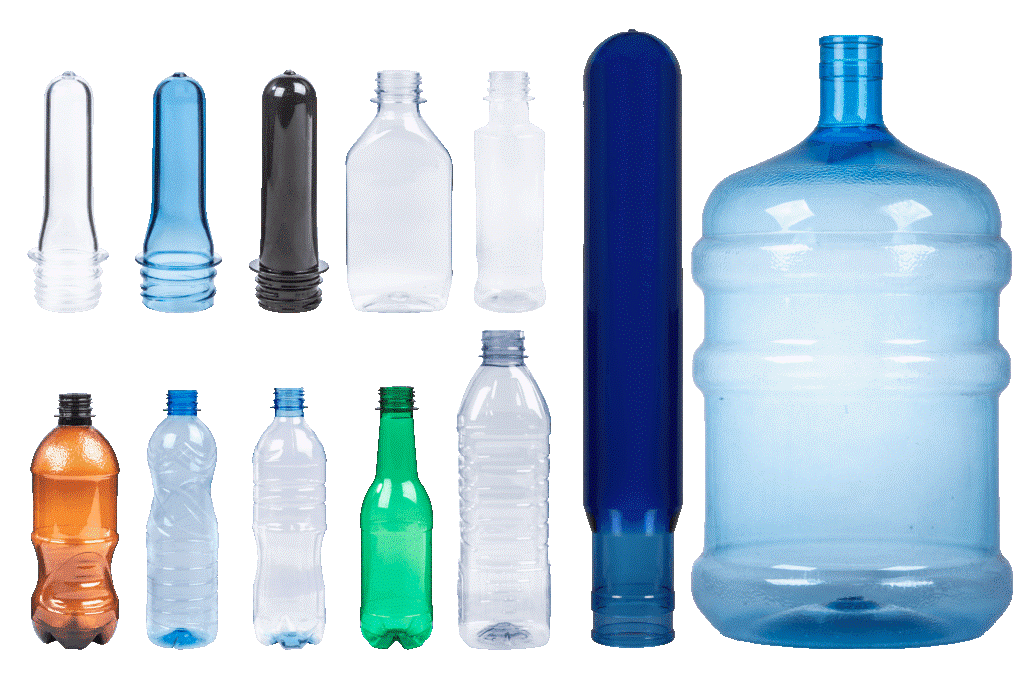
Plastic bottles, containers and packaging materials are sorted, washed, shredded and converted into flakes and pellets that become valuable industrial inputs. Some are transformed into construction materials, others become household products, industrial packaging, textiles and increasingly sophisticated manufactured goods.
In Matugga, Acacia Foundation operates one of East Africa’s largest plastic recycling facilities, sitting on approximately 80,000 square metres of industrial space and supported by over 55,000 square metres of storage and recycling infrastructure. Every day, waste materials entering the facility are transformed into valuable products that re-enter the economy instead of polluting the environment.
In Masaka, Eco Brixs has built a circular business model that purchases plastic waste directly from communities and converts it into construction products such as pavers, bricks and fence posts. The model demonstrates how environmental conservation can simultaneously create employment and local economic activity.
Other innovators are pushing recycling beyond traditional boundaries. Ecoplastile is transforming difficult-to-recycle plastics into durable low-carbon construction products, while Helton Traders has pioneered technologies that convert discarded PET bottles into high-quality sewing threads. What was once a beverage bottle can now find a second life in Uganda’s textile industry.
Plastic Recycling Industries (PRI), established through Coca-Cola Beverages Uganda’s sustainability initiatives. The facility has built a collection and recycling system capable of recovering plastic equivalent to 100 percent of the packaging introduced into the market by the company, demonstrating that large-scale circularity is not merely an aspiration but an achievable reality.
Yet Uganda’s recycling journey is only beginning.
Currently, approximately 8,000 tonnes of recycled plastic flakes are exported annually, generating more than USD 4.7 million in export earnings. While these exports demonstrate growing international demand for recycled materials, they also highlight a larger opportunity. Instead of exporting recycled materials in semi-processed form, Uganda can increasingly use them as inputs for domestic manufacturing. Every tonne recycled and processed locally creates additional value, supports industrial growth and generates higher-paying jobs.
Globally, the recycling industry is transitioning from basic waste recovery to advanced circular manufacturing systems. One of the most promising developments is bottle-to-bottle recycling, where used PET beverage bottles are recycled into new food-grade bottles. This technology fundamentally changes how plastic is viewed. Instead of following a linear path from production to disposal, plastic can remain in continuous circulation, reducing demand for virgin raw materials while lowering environmental impacts.
For Uganda’s beverage industry, bottle-to-bottle recycling presents a transformative opportunity. Every bottle recovered from the environment becomes a potential input for producing another bottle, creating a self-sustaining loop that combines environmental stewardship with industrial efficiency.
Even more exciting are emerging waste-to-fuel technologies. Around the world, plastics that are difficult to recycle mechanically are increasingly being converted into alternative fuels and industrial energy sources. As these technologies become commercially viable across Africa, materials once considered unrecoverable may become valuable contributors to energy security and resource efficiency.
The foundation for this future is already being built.
Through industry-led Extended Producer Responsibility (EPR) initiatives, major manufacturers including Coca-Cola Beverages Uganda, Crown Beverages, Harris International, Mukwano Group and Uganda Breweries are investing in systems designed to improve collection rates, strengthen recycling infrastructure and ensure more plastic remains within the circular economy.
“The vision is ambitious but achievable: a Uganda where plastic waste is no longer viewed as waste at all, but as a strategic industrial resource.”
The environmental benefits are obvious. Cleaner cities. Cleaner drainage systems. Cleaner wetlands. Reduced pollution. Reduced pressure on landfills. The economic benefits are equally compelling. More investment. More manufacturing. More exports. More innovation. More jobs.
As the world commemorates Environment Day, Uganda’s recycling sector provides a powerful reminder that environmental sustainability and economic development do not have to compete with one another.
The future of recycling in Uganda is no longer a distant possibility. It is already happening. Every bottle collected, every kilogram recycled and every investment made in circular manufacturing brings Uganda closer to becoming a regional leader in sustainable industrial development.
“The challenge before us is not whether recycling works. The evidence is already all around us. The challenge is how quickly we can scale it.”