

By Diana N.Kintu
Uganda’s forests are demonstrating that climate finance can deliver tangible results when supported by strong governance and accountability.
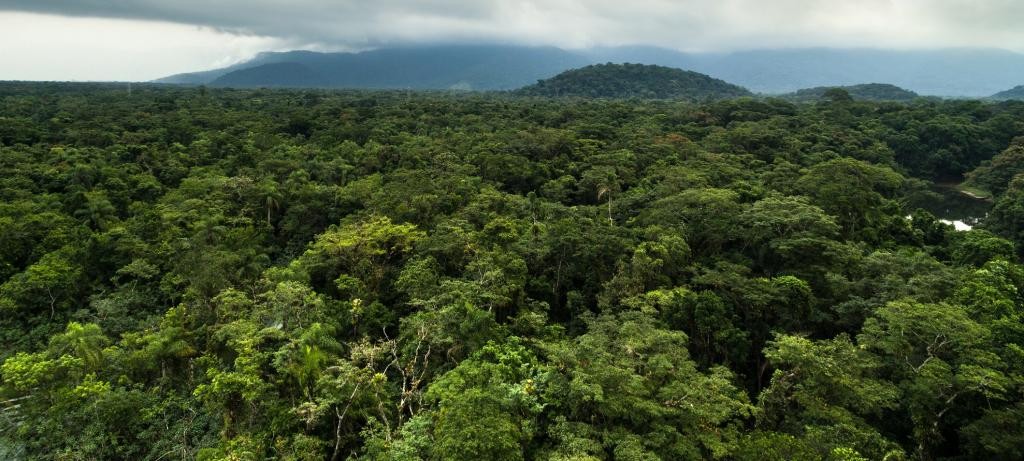
According to a statement from the Ministry of Water and Environment, the country has sustained and protected approximately 2.5 million hectares of forest and natural landscapes since 2022 through a nationwide, jurisdictional approach.
Uganda’s forest cover currently stands at an estimated 2.4–2.7 million hectares, equivalent to 12–13 per cent of the country’s land area. This represents a decline from 24 per cent in 1990, with much of the loss driven by agricultural expansion, charcoal production, and biomass extraction. However, the Ministry emphasised that focusing solely on historical loss obscures the progress now being made.
“Uganda’s experience shows that forest conservation at scale is not a theoretical ambition. It is a practical exercise in governance, data, and political will,” the statement noted.
Central to this progress has been the strengthening of forest governance and monitoring systems. Uganda’s National Forest Monitoring System, operated by the Department of Forest Management, draws on inventories, biomass assessments, and satellite data to track land-use change and emissions. The results are independently verified and publicly reported, meeting international standards for transparency.
Policy interventions have also targeted the drivers of deforestation. In 2023, a presidential executive order addressed environmental damage associated with the charcoal trade. Climate-smart agriculture, agroforestry, and land-use planning initiatives have been expanded to enhance productivity without further encroachment on forested areas.
Despite this progress, Uganda continues to face challenges. Satellite monitoring indicates an annual loss of natural forest amounting to tens of thousands of hectares, including an estimated 27,000 hectares in 2024. Nevertheless, the Ministry emphasised that climate outcomes are shaped by long-term trajectories rather than isolated snapshots, noting that Uganda’s overall direction remains positive.
This progress positions Uganda favourably for emerging mechanisms such as the Tropical Forest Forever Facility (TFFF), which proposes long-term, performance-based finance linked to verified forest outcomes. Eligibility is expected to depend on demonstrated forest cover, declining deforestation trends, and credible national monitoring systems—areas in which Uganda has made sustained institutional investments over the past decade.
“Any revenues generated through forest-based climate finance are intended to be reinvested in continued protection, enforcement, and livelihood support, thereby reducing the risk of reversal and ensuring long-term impact,” the Ministry explained.
Uganda’s safeguards framework addresses land tenure, access to information, consultation, grievance mechanisms, and anti-corruption measures, ensuring that communities derive tangible benefits while governance systems uphold accountability.
The Ministry further noted that Uganda’s forests play a vital role in regulating water systems, supporting biodiversity, underpinning rural livelihoods, and enhancing national resilience. They also form part of a global climate system that depends on the preservation of standing forests well beyond national borders.
In conclusion, the Ministry emphasised that if the global community is serious about establishing a credible next generation of forest finance, it must move beyond rhetoric and reward countries that are putting durable systems in place. While Uganda’s progress does not claim perfection, it demonstrates clear readiness—evidence that climate finance can succeed when sustained national effort is recognised.