

By Diana N.Kintu
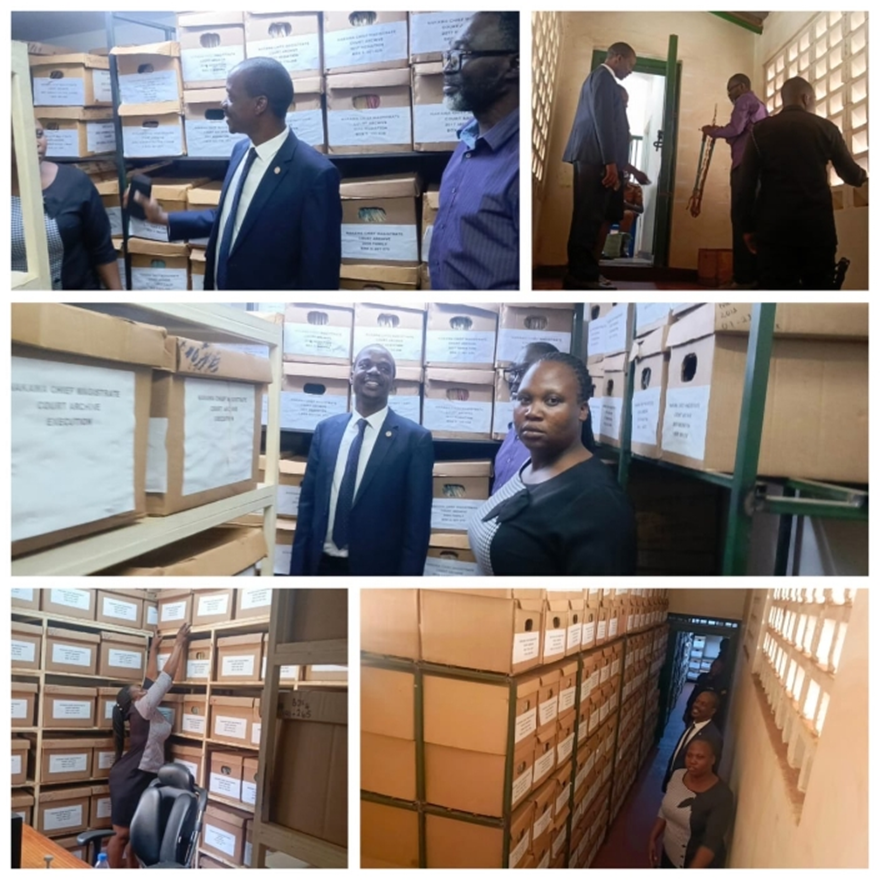
The Nakawa Chief Magistrate’s Court has completed a major reorganisation of its archives and exhibits rooms, in a move aimed at strengthening records management and improving access to court files.
The exercise forms part of broader efforts within the Judiciary to streamline the storage, organisation and retrieval of records, with officials saying the initiative will significantly enhance efficiency in court operations and service delivery.
According to Chief Magistrate HW Allan Gakyaro, the process began earlier this year as a deliberate intervention to address longstanding challenges in records management within the court registry.
“This initiative is intended to ensure that files are properly organised, easily traceable and securely stored, which is essential for the smooth administration of justice,” he said.
The reorganisation was supported by key stakeholders within the Judiciary, including Registrar Magistrates Affairs HW Agnes Alum and the Permanent Secretary/Secretary to the Judiciary, Pius Bigirimana, who provided financial assistance to facilitate the exercise.
Court officials say the revamped system introduces a more structured approach to file management, with the adoption of an index catalogue system that enables registry staff to organise records systematically. The system is expected to improve the speed and accuracy of retrieving files, reducing delays in handling cases.
Efficient records management remains a critical component of judicial processes, particularly in high-volume courts such as Nakawa, where timely access to case files can directly impact case progression and outcomes.
Despite the progress made, Mr Gakyaro acknowledged that several challenges persist. He pointed to infrastructural constraints, including a leaking roof in part of the archives room, which poses a risk to the preservation of vital documents.
“Water damage is a serious threat to court records, and addressing this issue is a priority if we are to safeguard important legal documents,” he noted.
Limited storage space for exhibits also continues to present difficulties, with growing case volumes placing additional pressure on available facilities. Judicial officers say this underscores the need for further investment in infrastructure to support records management systems.
To build on the improvements, the court is planning to introduce file cards for each case file. The system will allow staff to track the movement and status of files more effectively, ensuring accountability and reducing the risk of misplaced documents.
In addition, Mr Gakyaro emphasised the importance of integrating information and communication technology (ICT) into records management processes. He noted that digital systems would greatly enhance storage capacity, improve tracking mechanisms and facilitate faster retrieval of information.
“Digitisation is the future of records management. It will not only improve efficiency but also strengthen transparency and accountability within the Judiciary,” he said.
The initiative aligns with ongoing reforms within the Judiciary of Uganda aimed at modernising court systems and improving service delivery to the public.
Legal experts note that proper records management is essential for maintaining the integrity of judicial processes, as it ensures that case information is accurate, accessible and secure. Poor records handling, they warn, can lead to delays, loss of files and reduced public confidence in the justice system.
With the completion of the reorganisation, Nakawa Chief Magistrate’s Court is expected to see improvements in operational efficiency, case management and overall accountability. Officials say the reforms mark an important step towards building a more responsive and reliable justice system.