

By Diana N. Kintu
The Government of Uganda has confirmed that the National Trade Review Conference 2026 will be held on 4–5 March 2026 at the Speke Resort Munyonyo, bringing together key stakeholders to chart the country’s trade and export growth agenda.
The two-day conference will convene under the theme, “Trade-Driven Transformation: Propelling Uganda to a $500B Economy by 2040.” The meeting is expected to serve as a strategic platform for reviewing trade performance, identifying policy gaps and advancing reforms aimed at accelerating structural transformation.
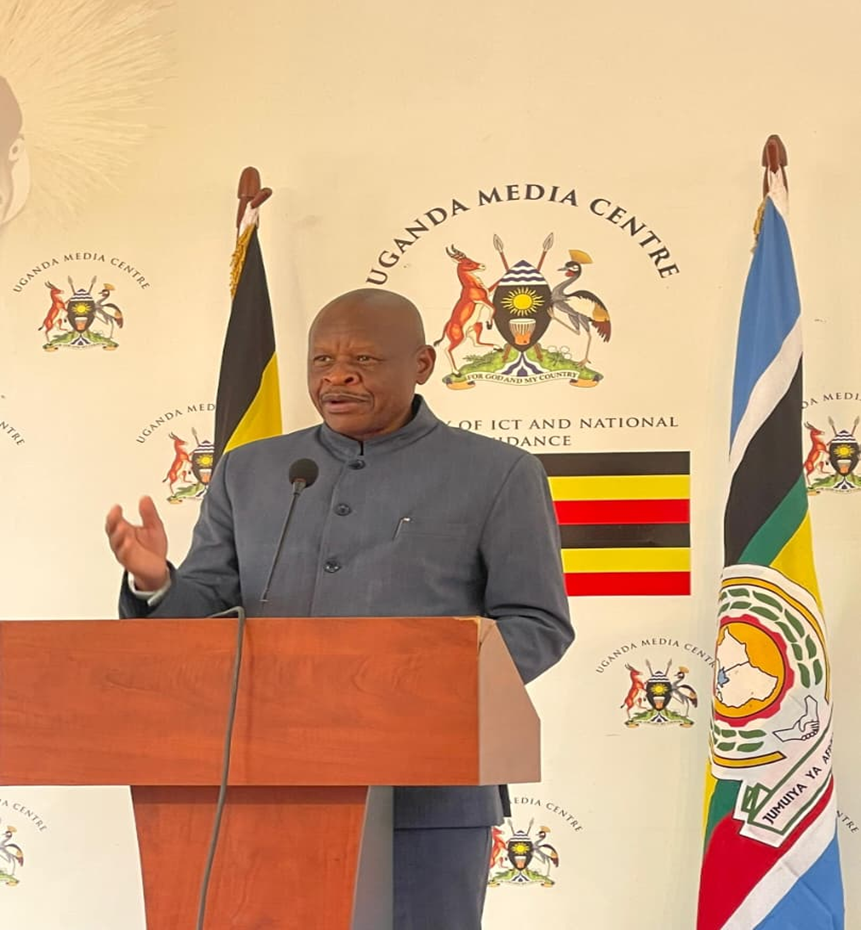
The Minister of Trade, Industry and Cooperatives, Hon. Wilson Mbadi, said the conference will focus on translating policy commitments into measurable outcomes.
“This conference is a working platform to move from policy intent to implementation,” Mr Mbadi said, noting that Uganda has already laid a foundation for economic expansion but must now consolidate and scale its gains through coordinated trade reforms.
Uganda is currently implementing a Tenfold Growth Strategy anchored on agro-industrialisation, tourism development, mineral exploitation, science, technology and innovation, as well as the creative industries. Trade has been identified as the central driver of this strategy, linking production sectors to both regional and international markets while ensuring that the benefits of growth are widely distributed across the economy.
According to the Minister, Uganda’s total exports reached between USD 13.3 billion and USD 13.4 billion in the 2024/25 financial year. Merchandise exports alone accounted for USD 10.6 billion, reflecting steady growth in key commodities. Among the strongest performing exports were coffee, gold, cocoa, sugar and fish.
The Minister emphasised that while export growth is encouraging, the next phase of development requires deeper value addition and enhanced competitiveness.
“The task before us now is to safeguard competitiveness, deepen value addition, expand regional market access, and ensure growth translates into jobs and prosperity for all Ugandans,” Mr Mbadi said.
The conference will provide an opportunity to take stock of Uganda’s trade performance, assess the effectiveness of existing frameworks and propose actionable reforms. It will also witness the official launch of the Revised National Trade Policy and the National Export Development Strategy, which are expected to guide the country’s trade agenda over the medium to long term.
Participants are expected from a broad cross-section of stakeholders, including government ministries, departments, and agencies, private sector leaders, cooperatives, academia, development partners, and regional bodies. Organisers say the inclusive approach is intended to foster collaboration, strengthen coordination and ensure shared ownership of the proposed reforms.
By the close of the conference, officials anticipate the adoption of a national communiqué outlining measurable actions, timelines, and responsibilities. The communiqué is expected to provide a clear roadmap for trade-driven structural transformation, aligned with Uganda’s long-term development aspirations.
Mr Mbadi underscored that Uganda has already demonstrated that sustained economic growth is achievable, citing improvements in export earnings and diversification efforts. However, he stressed that the country must now transition from consolidating gains to multiplying them.
“Through deliberate, coordinated and evidence-based trade reforms, we are confident Uganda can transition from protecting gains to multiplying them on our journey to a US$500 billion economy by 2040,” he said.
The National Trade Review Conference 2026 is therefore being positioned as a pivotal moment in Uganda’s economic planning calendar, with expectations high that it will sharpen the country’s trade strategy and accelerate progress towards a more competitive, export-led economy