

By Diana N. Kintu
The Minister of State for Disaster Preparedness, Relief and Refugees, Hon. Lillian Aber, has commended the Governments of Denmark and the Netherlands for their sustained and substantial support to Uganda’s refugee response. She described the two countries as reliable partners whose contributions continue to reinforce resilience, inclusion and long-term sustainability in refugee-hosting communities.
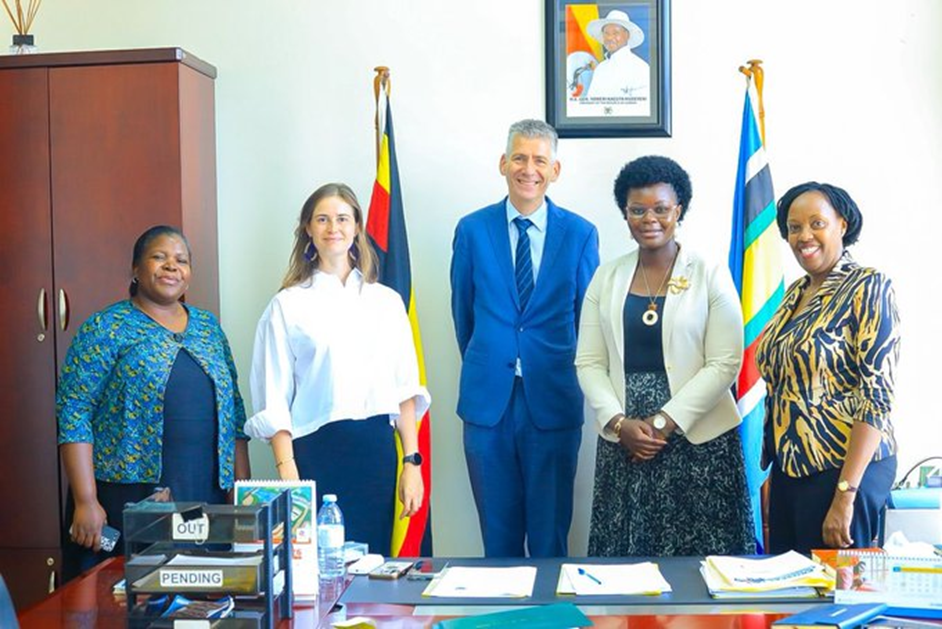
During a meeting with the Danish Ambassador to Uganda, H.E. Signe Winding Albjerg, Hon. Aber expressed appreciation for Denmark’s strategic focus on climate resilience in districts hosting refugees. She noted that environmental pressures and climate-related shocks remain key challenges in many settlements and surrounding communities.
“We commend Denmark’s focus on climate resilience in refugee-hosting districts, particularly through support to agriculture, environmental protection, sustainable energy and women’s empowerment,” Hon. Aber said.
She highlighted that these interventions not only address immediate humanitarian needs but also promote long-term development outcomes for both refugees and host communities. By supporting climate-smart agriculture, renewable energy initiatives and environmental restoration efforts, Denmark is contributing to reduced vulnerability and improved livelihoods.
The Minister also praised Denmark’s support for youth-focused initiatives, particularly the Strengthening of Adolescents and Youth Empowerment (SAY) Programme. “The programme has improved access to sexual and reproductive health services and strengthened response mechanisms for young people,” she noted, underscoring the importance of targeted support for adolescents in displacement settings.
Uganda further expressed gratitude to Denmark for mobilising USD 62 million towards its pledges made at the Global Refugee Forum, exceeding the initial commitment of USD 50 million. Hon. Aber described this as a demonstration of Denmark’s dependable partnership and shared commitment to Uganda’s progressive refugee policy.
In a separate engagement in Kampala, Hon. Aber met with Mr Bouwe-Jan Smeding, Deputy Head of Mission and Head of Cooperation at the Embassy of the Kingdom of the Netherlands. Discussions focused on the Netherlands’ continued backing of Uganda’s refugee response, particularly through the PROSPECTS programme, as well as its strong emphasis on localisation.
Hon. Aber noted that the Netherlands has fulfilled over USD 66 million towards its Global Refugee Forum pledge and continues to champion the Humanitarian–Development–Peace Nexus approach. This model promotes coordinated action across humanitarian assistance, long-term development and peacebuilding efforts to ensure sustainable outcomes.
She highlighted Dutch support in key sectors including education, economic inclusion, social protection, infrastructure and access to justice. “Their support is making a tangible impact on refugees and host communities,” she observed, pointing to improvements in service delivery and expanded livelihood opportunities.
However, the Minister also raised concerns regarding current funding constraints affecting the Comprehensive Refugee Response Framework (CRRF) Secretariat. She emphasised that sustained and predictable financial support would be critical to maintaining effective coordination and implementation of Uganda’s refugee response strategy.
Uganda hosts one of the largest refugee populations in the world and is widely recognised for its inclusive approach, which allows refugees access to land, employment and social services. Hon. Aber reiterated the Government’s commitment to maintaining this progressive model, while acknowledging that continued international solidarity remains essential.
Throughout her public service, Hon. Aber has consistently advocated for policies that promote refugee welfare and self-reliance. She has supported initiatives aimed at expanding access to healthcare, education and livelihood opportunities, while encouraging the integration of refugees into national development planning frameworks.
Her leadership has contributed to strengthening partnerships and mobilising resources that benefit both displaced populations and host communities. By promoting inclusion and shared development, Uganda continues to position itself as a model for sustainable refugee management.