

By Diana N. Kintu
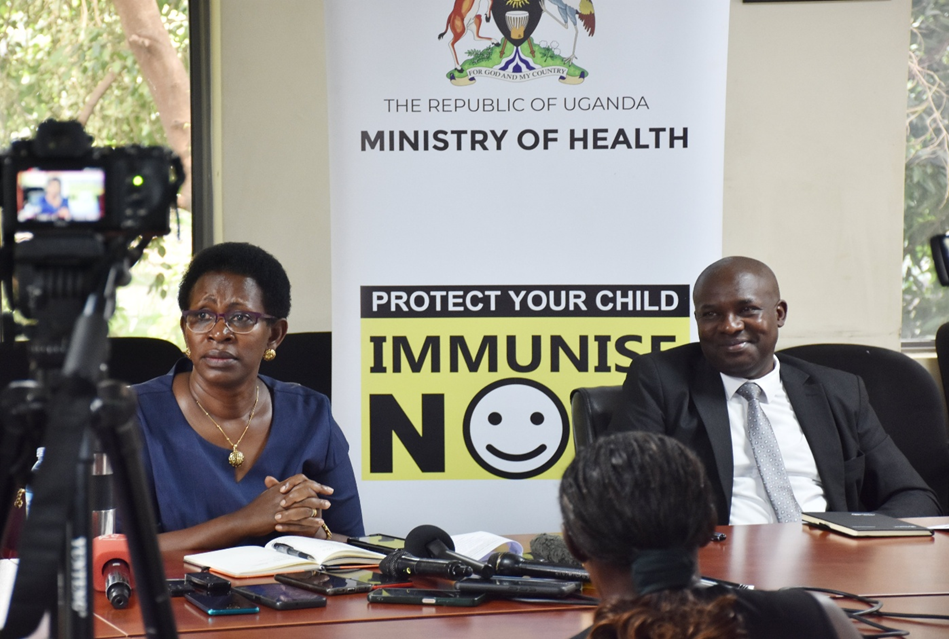
The Ministry of Health has inaugurated its first-ever monthly media breakfast meeting, marking a new step towards strengthening engagement with journalists and improving the dissemination of accurate public health information. The inaugural session focused on the status of routine immunisation in Uganda, underscoring the government’s renewed commitment to disease prevention and community protection.
The initiative aims to foster regular dialogue between health officials and the media, ensuring that journalists are well-informed and equipped to communicate timely and factual health messages to the public. According to ministry officials, the platform will serve as a consistent avenue for updates on national health priorities, emerging challenges, and policy shifts.
During the meeting, Dr Michael Baganizi, Programme Manager of the Uganda National Expanded Programme on Immunisation (UNEPI), delivered a detailed briefing on the country’s routine immunisation programme. He outlined the 14 vaccines currently provided under the national schedule, which protect children against diseases such as measles, polio, tuberculosis, hepatitis B, tetanus, diphtheria and whooping cough.
Dr.Baganizi emphasised the critical importance of completing vaccinations on schedule, warning that delays or missed doses significantly weaken protection and expose children to preventable illnesses. He noted that while Uganda has made progress in expanding immunisation coverage, gaps remain, particularly in hard-to-reach communities and urban informal settlements.
“We encourage parents and caregivers to ensure children receive all vaccines at the right time. Delayed immunisation compromises immunity and increases the risk of outbreaks,” Dr Baganizi said.
He also announced a key policy shift in the prevention of cervical cancer, revealing that Uganda has transitioned to a single-dose Human Papillomavirus (HPV) vaccine regimen. The vaccine will be administered to all girls aged 10 years, replacing the previous multi-dose schedule. According to Dr Baganizi, the change is aligned with global scientific evidence and World Health Organisation recommendations, and is expected to improve uptake while reducing logistical and operational challenges.
“The single-dose regimen will allow us to reach more girls and protect future generations from cervical cancer,” he explained, adding that the vaccine provides long-term protection and is safe and effective.
Permanent Secretary at the Ministry of Health, Dr Diana Atwine, underscored the central role of the media in sustaining immunisation gains. She commended journalists for helping to counter misinformation, myths and vaccine hesitancy, which she said continue to undermine public health efforts.
Dr. Atwine also addressed the ongoing rollout of the malaria vaccine, urging parents to ensure children complete all four recommended doses. She noted that partial vaccination reduces effectiveness and leaves children vulnerable to severe malaria, which remains one of the leading causes of illness and death among young children in Uganda.
In addition, Dr. Atwine expressed concern over the rising burden of non-communicable diseases, particularly cancer. She highlighted cervical cancer as one of the leading causes of death among women, stressing that prevention through vaccination remains the most effective strategy.
“Cancer is increasing exponentially. One of the biggest killer diseases among women is cervical cancer. Once we immunise all girls aged 10 years, an entire generation is protected,” she said.
The Ministry of Health reaffirmed its commitment to working closely with the media as key partners in advancing the national immunisation agenda. Officials said informed and responsible reporting is essential in mobilising communities, promoting vaccine confidence, and safeguarding public health across the country.