

By Diana N. Kintu
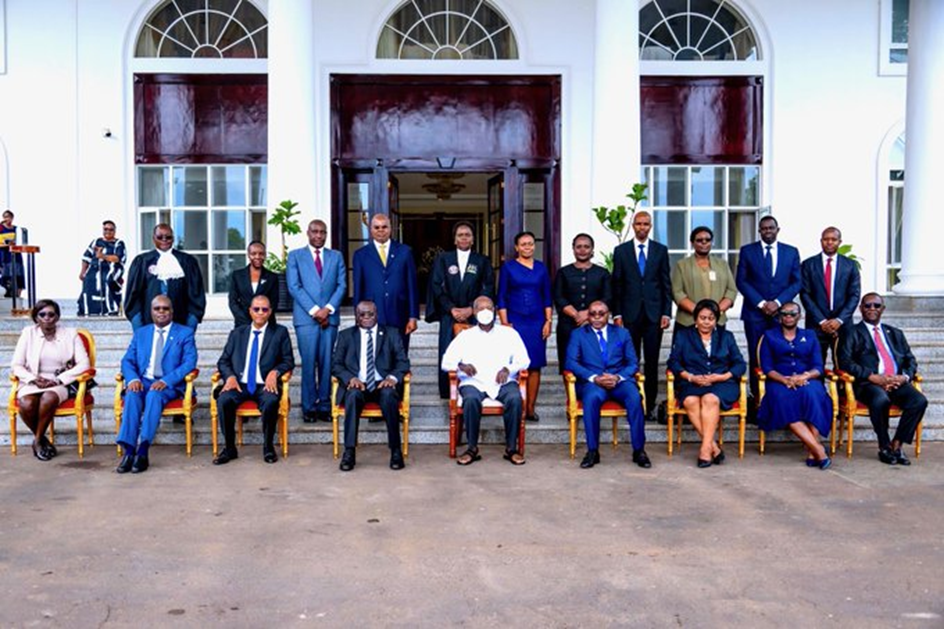
Uganda’s Judiciary entered a new chapter on Sunday, 25 January, 2026, following the swearing-in of Hon. Dr Flavian Zeija as the country’s new Deputy Chief Justice. The ceremony, held at the State House in Entebbe, marked a significant leadership transition and the official retirement of Hon. Richard Buteera, who has served the Judiciary for over four decades.
Dr Zeija’s appointment comes at a time when the Judiciary is undergoing wide-ranging reforms aimed at improving access to justice, enhancing efficiency, and restoring public confidence in the legal system. The event was attended by senior government officials, members of the Judiciary, legal practitioners, and guests, underscoring the importance of the occasion.
In his remarks after taking the oath of office, Dr Zeija emphasised the urgent need to reform what he described as outdated and irrational legal practices that no longer reflect Uganda’s social and economic realities. He specifically highlighted inheritance and land-related disputes as areas requiring immediate attention, noting that such cases continue to account for a large proportion of matters brought before courts.
According to Dr Zeija, many legal procedures currently in place impose unnecessary burdens on citizens, particularly those in rural communities, who often lack the financial means and legal knowledge to navigate complex judicial processes. He called for a more practical and responsive justice system that prioritises fairness, efficiency, and accessibility for all Ugandans.
Legal observers have welcomed Dr Zeija’s reform-oriented approach, noting that clans and traditional institutions have historically managed inheritance disputes without excessive litigation. They argue that while modern legal frameworks are necessary, they should also recognise and integrate culturally accepted practices that promote harmony and reduce conflict.
The Deputy Chief Justice also addressed the evolving legal position on women’s inheritance rights. With constitutional provisions allowing girls and women to inherit property under specific conditions, there has been a growing public debate on the need to align statutory law with these protections. Dr Zeija noted that clearer legal guidance would help prevent disputes, protect vulnerable groups, and promote equity in family and land matters.
The swearing-in ceremony also served as an opportunity to honour the long and distinguished service of Hon. Richard Buteera, who officially retired after 44 years in the Judiciary. Speakers at the event praised his dedication, integrity, and contribution to the development of Uganda’s legal system. His tenure has been credited with strengthening judicial independence and mentoring generations of judicial officers.
Observers described the transition as a balance between continuity and renewal within the Judiciary. While Dr Zeija inherits an institution shaped by decades of service from leaders like Justice Buteera, he is expected to bring fresh perspectives aligned with the Judiciary’s current transformation agenda.
Dr Zeija’s appointment is widely seen as reinforcing the Judiciary’s commitment to modernisation, accountability, and service delivery. His leadership is expected to play a critical role in ongoing efforts to streamline court processes, reduce case backlogs, and promote ethical conduct within the justice system.
As he assumes office, expectations remain high that the new Deputy Chief Justice will translate his reform pledges into tangible improvements, ensuring that justice is not only administered according to the law but is also accessible, fair, and responsive to the needs of Ugandan society.