

By Diana N. Kintu
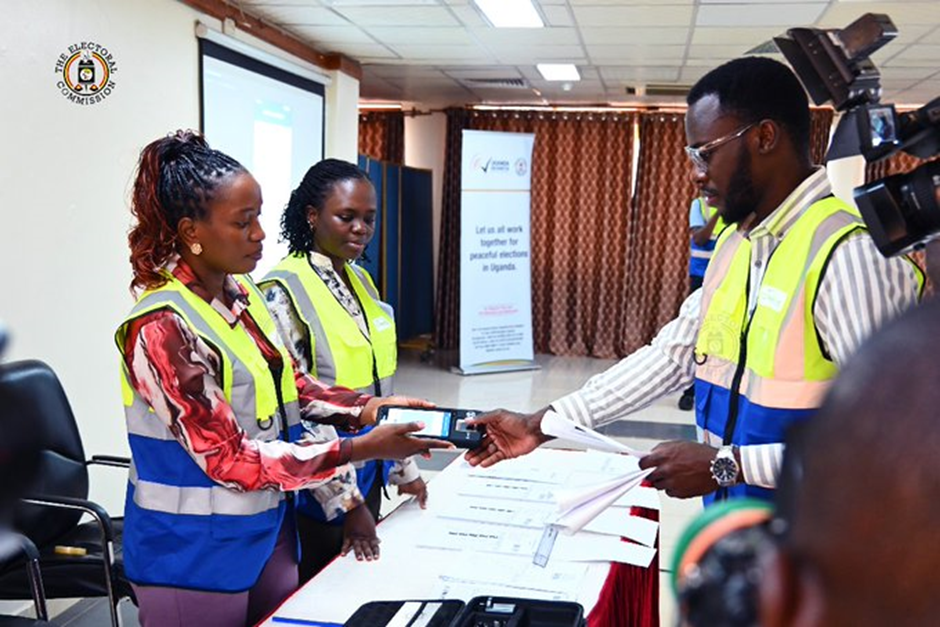
The Electoral Commission (EC) has embarked on a nationwide sensitisation drive to familiarise the public with the new technology set to play a central role in the 2026 General Elections. During an engagement held at Hotel Africana on Thursday, 4 December, Commission officials demonstrated the functionality of the newly acquired Biometric Voter Verification Kits (BVVKs) to government communication officers and journalists.
The session, led by the project manager, Mr Muhammad Mubajje, provided participants with an opportunity to interact with the machines and understand how they would be deployed at polling stations. According to the Commission, the BVVKs are engineered to electronically verify a voter’s identity using biometric data captured during the national voter registration exercise. The machines rely primarily on fingerprint recognition to authenticate eligible voters before they receive ballot papers.
Mr Mubajje explained that this technology is expected to reinforce the “One Man, One Vote” principle by ensuring that each voter is uniquely and accurately identified. He noted that the verification process will be quick, efficient, and resistant to manipulation, thereby strengthening the integrity of the polls. The EC anticipates that the devices will reduce instances of personation, multiple voting, and other irregularities that have posed challenges in previous elections.
Wednesday’s engagement was part of a broader meeting aimed at updating stakeholders on the Commission’s preparedness ahead of the 2026 electoral roadmap. The EC highlighted the need for timely, factual, and responsible communication as the election period draws closer. In an update shared on X, formerly Twitter, the Commission underscored the importance of countering misinformation, disinformation, hate speech, and the growing trend of commercialised politics.
Officials urged communication officers to enhance public understanding of electoral processes by providing accurate, timely updates to their respective constituencies. Journalists were similarly encouraged to prioritise factual reporting, particularly in the context of digital platforms where misleading narratives can rapidly spread.
The event brought together a diverse group of government communicators, media practitioners, and representatives from various institutions. Images circulated online showed a room filled with participants keenly following demonstrations of how the BVVKs function, reflecting the EC’s push for inclusivity and transparency. According to organisers, the engagement was designed to build public confidence in the new system by ensuring that key information disseminators fully understand both its capabilities and limitations.
The Commission noted that the introduction of biometric verification is one of the final preparatory steps before the rollout of the 2026 elections. The BVVKs will be stationed at every polling location, forming a critical layer of security in the verification process. EC officials stated that while the technology represents a significant shift from traditional methods, voters can expect a straightforward experience at polling stations.
In addition to strengthening identity verification, the technology is expected to improve record-keeping and reduce the administrative workload on polling officials. By automating key elements of the verification process, the BVVKs should allow election supervisors to focus more closely on ensuring orderly, transparent voting.
As Uganda moves closer to the 2026 General Elections, the EC maintains that public engagement remains essential. Sensitisation sessions such as the one at Hotel Africana will continue across the country, with additional training planned for district election administrators, presiding officers, and other frontline personnel.
The demonstration of the biometric devices marks a significant milestone in the country’s electoral preparation. With millions of Ugandans set to interact with the BVVKs on polling day, the Commission hopes that early exposure and thorough public awareness will encourage trust and minimise confusion during the voting process.