

By Diana. N. Kintu
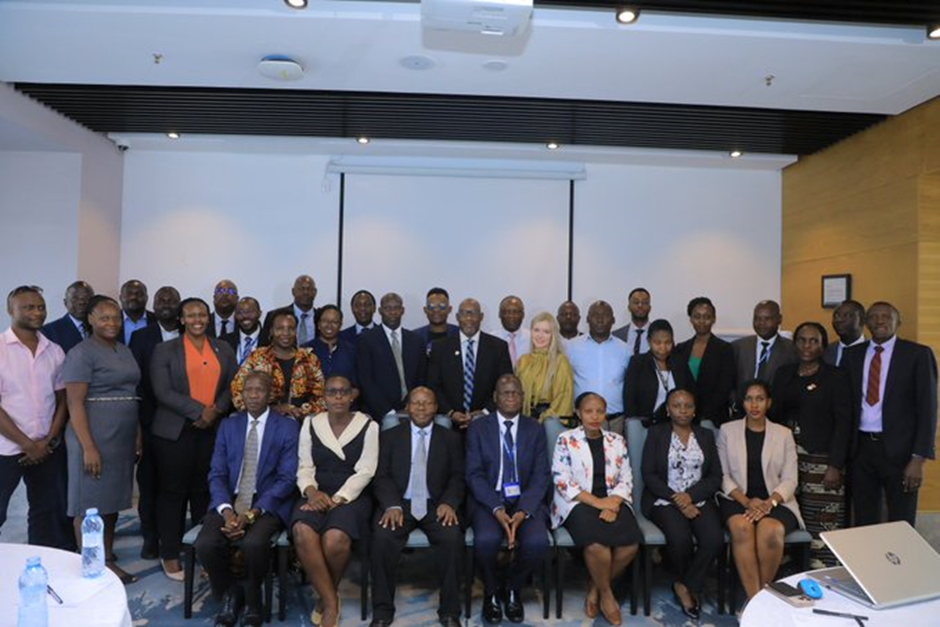
A pivotal scoping workshop on innovation in health care financing commenced today at the Four Points by Sheraton in Kampala, bringing together senior officials from key government ministries, agencies, and international partners. The five-day event, running until December 5th, is organised by the Ugandan Embassy in Washington, D.C., and is themed: “Health as a Critical Infrastructure – Building Fiscal Resilient & Data-Verified Investment Pathways for Uganda.”
The workshop marks a decisive step in Uganda’s efforts to move beyond policy discussions towards actionable strategies that can secure sustainable investment in the country’s health sector. Its primary objective is to collaboratively design Uganda’s first proof-based, fiscally secure, blended-finance health service pilot. The event brings together senior representatives from the Ministry of Finance, Planning and Economic Development, the Ministry of Health, the Bank of Uganda, the Uganda Cancer Institute (UCI), the Uganda Investment Authority, and the Private Sector Foundation Uganda (PSFU), reflecting a whole-of-government approach to addressing national health financing challenges.
Officially opening the session, Ambassador Elly Kamahungye, Head of the International Political Cooperation Department representing the Ministry of Foreign Affairs Permanent Secretary, highlighted the strategic significance of the initiative. Ambassador Kamahungye emphasised the ministry’s commitment to “supporting initiatives that strengthen cross-border collaboration, attract investment, and engage Uganda’s highly skilled and influential global diaspora community.” He traced the workshop’s origins to high-level engagements at globally recognised institutions, including Harvard University and Johns Hopkins University, which catalysed the early development of the Global Cancer Financing Platform—a model now taking shape in Uganda.
Dr. Jackson Orem, Executive Director of the Uganda Cancer Institute and a key driver of the workshop, outlined the technical vision underpinning the discussions. He explained that the gathering serves as a critical step in preparing a pioneering health financing mechanism. According to Dr. Orem, the model aims to leverage diaspora remittances and blended-finance guarantees to strengthen Uganda’s health system. He further noted that the initiative represents significant progress in mobilising sustainable, fiscally secure financing pathways for priority health services, beginning with a country-led pilot that will demonstrate proof of concept and the potential for scaling up.
The initiative has also received strong political backing. Ambassador Kamahungye informed attendees that both the Permanent Secretary and the Secretary to the Treasury have expressed keen interest in exploring performance-linked, risk-sharing models supported by credible financial instruments. This policy direction received formal endorsement from the Minister of Health, Dr. Jane Ruth Aceng Ocero, through a Declaration of Support issued in September 2025. The declaration signals Uganda’s readiness to pilot innovative financing models aimed at strengthening national cancer services, with potential benefits extending to the wider East African region.
Framing health as critical national infrastructure, the workshop seeks to establish investment pathways that are not only fiscally resilient but also grounded in robust, data-driven evidence. The convergence of diplomatic, financial, and health sector expertise at the event reflects a strategic commitment to securing innovative and sustainable funding mechanisms. While cancer care is the immediate focus, organisers emphasise that the approach could serve as a blueprint for financing other essential health services across the country.
By combining international best practices, local expertise, and diaspora engagement, the workshop represents a bold step towards transforming Uganda’s health financing landscape. As participants work through the five-day agenda, the emphasis remains on designing scalable, accountable, and financially sustainable health interventions that can meet the needs of Uganda’s population while attracting long-term investment. The outcomes of this workshop are expected to lay the groundwork for a health financing model that could redefine how critical services are funded, delivered, and sustained nationwide.