

By Diana N.Kintu
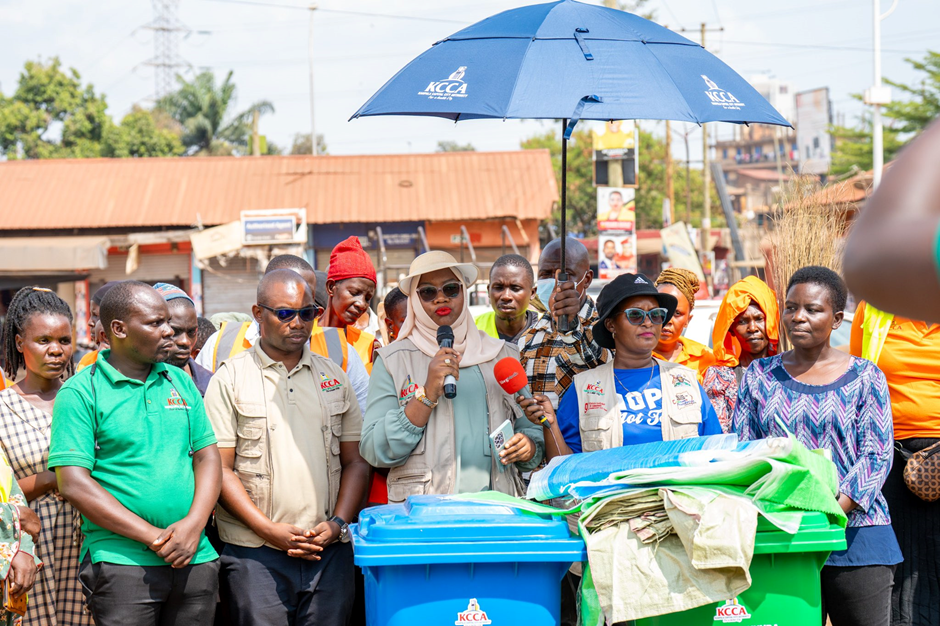
The Kampala Capital City Authority (KCCA), in partnership with community groups and non-profit organisations, on Thursday launched a new citywide sanitation campaign aimed at improving hygiene and waste management in the capital. The initiative, known as the “Weyonje Sanitation Challenge 2025,” began with a community clean-up exercise in Kisenyi III, Kiguli Zone, in Kampala Central Division.
City officials, local leaders, youth groups, and residents took part in the clean-up, demonstrating renewed commitment to addressing persistent sanitation challenges in one of Kampala’s busiest neighbourhoods. The exercise involved clearing waste from public spaces and engaging households in good hygiene practices. Mobilisers held door-to-door sensitisation sessions, encouraging residents to adopt responsible waste disposal habits.
A key message delivered during the outreach was the importance of sorting waste at the point where it is generated. Community educators explained that separating organic, recyclable, and non-recyclable waste makes collection more efficient and supports recycling efforts. Officials emphasised that improved sanitation begins with simple changes at the household level.
The launch attracted a wide range of partners, showcasing the collaborative approach behind the initiative. Environmental groups such as Towa Uchafu na Nusu and the Green City Initiative joined the effort, alongside youth platforms like U. Report-Fundo and the Patriotic League Uganda. Academic institutions, including the Makerere University Medical Students Association (MUMSA), and financial groups such as The 7 hills and Community SACCO, also participated.
Hajjat Sharifah Buzeki, whose message on X (formerly Twitter) was shared by the KCCA official account, thanked everyone who took part in the exercise. She praised the diverse coalition of partners, noting that sustainable improvement requires shared commitment and coordinated action.
Kampala continues to face significant sanitation challenges linked to rapid population growth, informal settlements, and limited waste collection coverage. Areas such as Kisenyi often struggle with uncollected waste, blocked drainage channels, and outbreaks of sanitation-related illnesses. While KCCA has implemented several interventions, officials maintain that lasting progress depends on active community involvement.
The Weyonje Sanitation Challenge 2025 will run throughout the year, with activities planned across all five city divisions. These will include more clean-up exercises, awareness campaigns, sanitation competitions, and community monitoring initiatives. Organisers stressed that the launch is only the beginning of a much broader mobilisation effort.
The public message at the event was clear: keeping Kampala clean requires collective responsibility. Officials urged residents, partners, and institutions to continue working together to make the city healthier and more dignified. As the campaign moves forward, KCCA hopes to strengthen community participation and embed good sanitation practices into daily life.
The launch in Kisenyi highlighted the growing importance of community-led action in improving urban cleanliness. With continued collaboration, officials believe the Weyonje Sanitation Challenge can make a meaningful difference in Kampala’s fight against poor sanitation.