
By Diana Kintu.
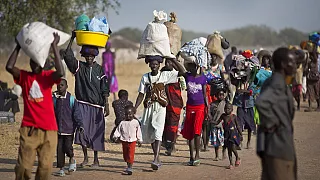
The Office of the Prime Minister (OPM) in Uganda has announced plans to send back at least 2,000 Sudanese refugees to their home country under a voluntary program. According to Mr. Patrick Okello, the Commissioner for Refugees in the OPM, said the refugees themselves have requested to return home, and arrangements are being made to facilitate their safe return.
Mr. Okello explained that the situation in Sudan has improved, and the government there is now functioning well for its citizens. The Sudanese ambassador to Uganda has already contacted us about this matter.
“We are making the necessary arrangements to repatriate them because we have been informed that the situation in Sudan is now better, and the government is operating normally,” he said.
This decision comes at a time when funding for refugees in Uganda is decreasing, making it difficult to provide enough services, including food. Sudan is the third-largest source of refugees in Uganda, after South Sudan and the Democratic Republic of Congo. Currently, Uganda hosts about 1.9 million refugees and asylum seekers.
Since April 2020, cuts in funding have forced the World Food Programme (WFP) to reduce food rations for refugees in Uganda’s 13 settlements. The reduction, which is at least 30 percent, has left many refugees with only one meal a day, greatly affecting their quality of life.
Mr. Okello also mentioned that, as of July this year, the Ugandan government had helped 15,000 Burundian refugees return home through the same voluntary program. However, he noted a challenge: some refugees return to Uganda after going back to their countries.
“The problem is that, because Uganda is peaceful and safe, some refugees go home but later come back. “Our country is very beautiful and secure,” he said.
Mr. Okello made these remarks during the opening of a two-day South Sudan Dialogue Conference in Kampala on Wednesday. The conference, organised by the Jesuit Refugee Service, aimed to discuss better protection for refugees, fair asylum processes, and access to essential services.
According to the United Nations High Commissioner for Refugees (UNHCR), an average of 600 people arrive in Uganda every day since the beginning of 2025. If this trend continues, the number of refugees in the country could reach two million by the end of the year. However, with emergency funds running low and services being reduced, the situation remains difficult for both refugees and the Ugandan government.
The government continues to work with international partners to find long-term solutions, but the growing number of refugees and limited resources pose serious challenges. The voluntary repatriation program is one way to ease the pressure while ensuring that refugees return home safely when conditions allow.